Build a Parent Support System That Actually Shows Up
What a Support System Should Actually Do
A parent support system isn’t “having people around.” It’s having help that shows up in the moments that normally tip the day into chaos. The goal is practical relief and emotional steadiness, built in a way that doesn’t create new stress.
- Reduce the daily load: meals, school/daycare pickups, errands, short childcare coverage, and quick household resets.
- Provide emotional steadiness: someone to vent to, someone to reality-check spiraling thoughts, and someone to celebrate small wins.
- Offer decision support: pediatric questions, childcare choices, school needs, and routine adjustments.
- Create continuity: backup plans for sick days, partner travel, and unexpected work or family stress.
- Protect parent well-being: sleep, decompression time, mental health care, and social connection.
Reliable support is especially protective during high-stress seasons. If you’re managing ongoing stress, resources like the American Psychological Association’s stress management guidance can help you identify what support would make the biggest difference.
Start With a Quick Needs Map (Time, Tasks, and Triggers)
Support works best when it’s mapped to real pain points, not vague intentions. A five-minute needs map can clarify what to ask for and who to ask.
- List the five moments that break your day most often (morning rush, dinner, bedtime, sick days, appointments).
- Identify the highest-impact tasks to outsource or share (one load of laundry, one meal train drop-off, one pickup).
- Define your emotional triggers and warning signs (overstimulation, isolation, decision fatigue, irritability, tears).
- Pick one must-have support for this month and one nice-to-have for later.
- Write a short help script to use when you’re stressed and words are hard.
Support System Blueprint: Match Needs to People and Boundaries
| Need | Best helper type | What to ask | Frequency | Boundary to set |
|---|---|---|---|---|
| Childcare coverage | Family, trusted sitter, parent swap | “Can you watch the kids for 2 hours on Tuesday?” | Weekly or as needed | Clear start/end time; emergency contact info |
| Meals | Friends, neighbors, meal train | “Could you drop a freezer meal this week?” | 1–2x/month | Diet notes; no surprise visits |
| School/daycare logistics | Other parents, partner, rideshare backup | “Can you do pickup Friday? I’ll do next Friday.” | Rotating | Confirm by 9am; car seat rules |
| Emotional support | One close friend, therapist, support group | “Can you talk for 10 minutes tonight?” | Weekly | Consent before advice; confidentiality |
| Home reset | Partner, family, paid cleaner | “Can you do dishes and counters tonight?” | 2–3x/week | Define minimum standard; no criticism |
Choose Your “Support Circle”: 3 Layers That Make It Resilient
A strong system has layers, so you’re not relying on one person to be everything. Think “inner circle, practical circle, professional circle.”
- Inner circle (1–3 people): the people who can handle urgent calls and honest conversations without turning it into a debate.
- Practical circle (3–8 people): neighbors, school contacts, parent friends, or relatives for task swaps and logistics.
- Professional circle: pediatrician, lactation consultant, therapist, postpartum doula, childcare providers.
- Aim for redundancy: at least two options for childcare, rides, and emotional check-ins.
- Keep a shared list: allergies, routines, emergency info, and who’s comfortable doing what.
For age-by-age guidance that can help you align routines and expectations with your child’s stage, the CDC’s Positive Parenting Tips are a solid reference point.
How to Ask for Help Without Overexplaining
Overexplaining can accidentally make help feel negotiable. Clear, small requests are easier to accept (and easier to repeat).
- Go specific + small + time-bound: “Could you pick up diapers today?” beats “I’m drowning.”
- Offer options: “Can you do A or B?” helps the other person say yes without reorganizing their life.
- Ask for the type of support: listening, advice, or hands-on help. Different days need different things.
- Use a default tough-day script: “Today is heavy. Can you take one thing off my plate?”
- Accept “no” quickly: the system is built so you can move to the next option without shame.
Create Simple Routines That Keep Support Consistent
Consistency is what makes support feel real. Set up “auto-pilot” touchpoints so help is already in motion before you hit empty.
Boundaries That Protect Relationships and Reduce Resentment
If you’re dealing with postpartum mood concerns or feel unsafe, prioritize professional support. Postpartum Support International offers ways to find help and connect with resources.
When Support Is Limited: Build Momentum From Small Wins
A Guided Workbook Approach That Makes the System Easier to Build
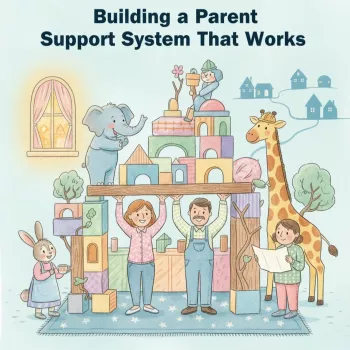
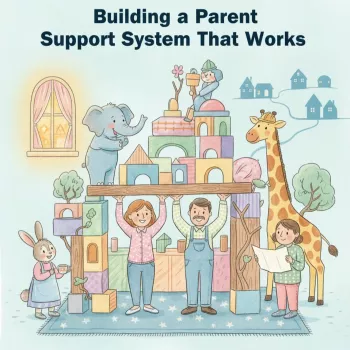
If you want a printable, organized approach, start here: Building a Parent Support System That Works | Ebook Guide for the Best Way to Build Parent Support System.
Helpful Digital Guides to Pair With Your Support Plan
- Connected at Home: Simple Ways to Spark Family Bonding for low-effort connection routines that make hard seasons feel warmer.
- 10 Loving Ways to Comfort Your Child When They Miss a Parent for quick, gentle strategies during separations, travel, or big transitions.
FAQ
What if asking for help makes relationships awkward?
Awkwardness drops when requests are specific and time-bound, like “Can you do pickup Friday?” instead of a vague “Can you help?” Offer two options, accept “no” quickly, and match the request to what that person naturally does well.
How do you build a support system after moving to a new area?
Start with repeatable touchpoints (library programs, school events, neighborhood groups) so you see the same faces regularly. Begin with small swaps—one playdate trade or one pickup—until you have two reliable contacts, then expand from there.
What are the most important boundaries to set with family help?
Clarify visit timing (text first, start/end times), caregiving rules (food, naps, car seats, meds), and whether you want listening or advice. These boundaries protect your child’s routine and keep the relationship from building resentment.








Leave a comment